New interview with Would-Be-Goods plus tips for songwriters from Jessica

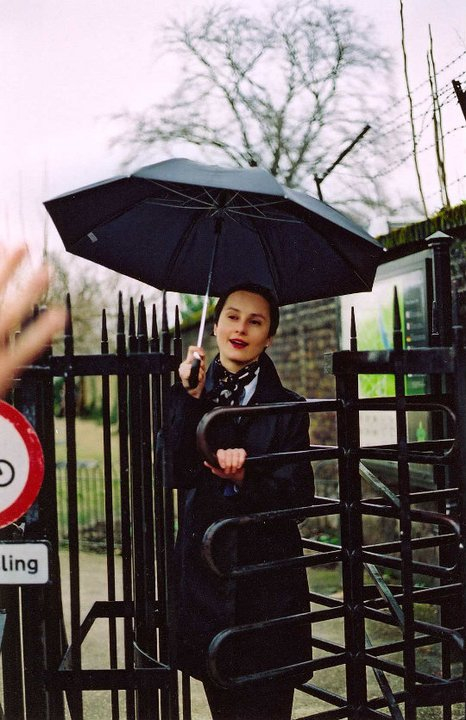
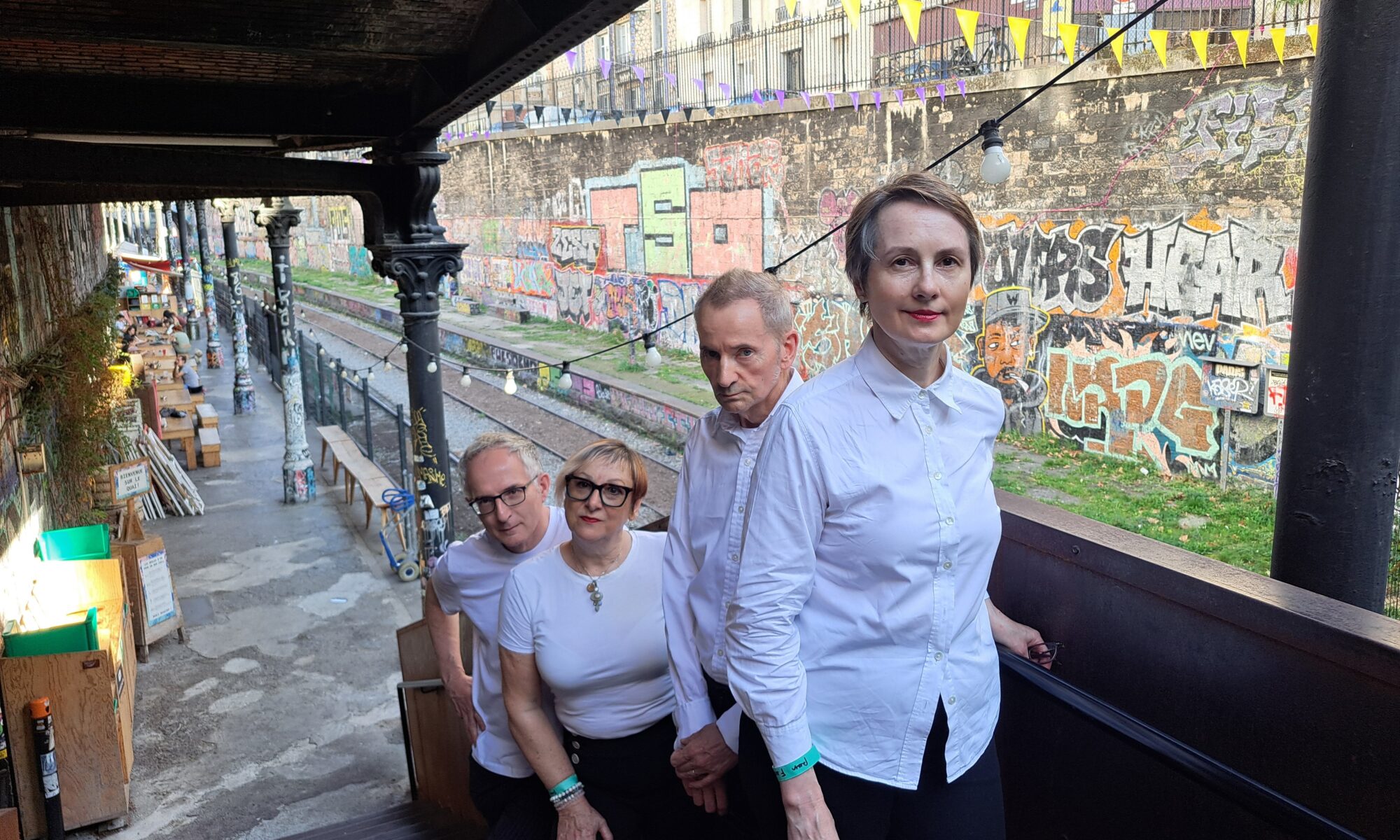
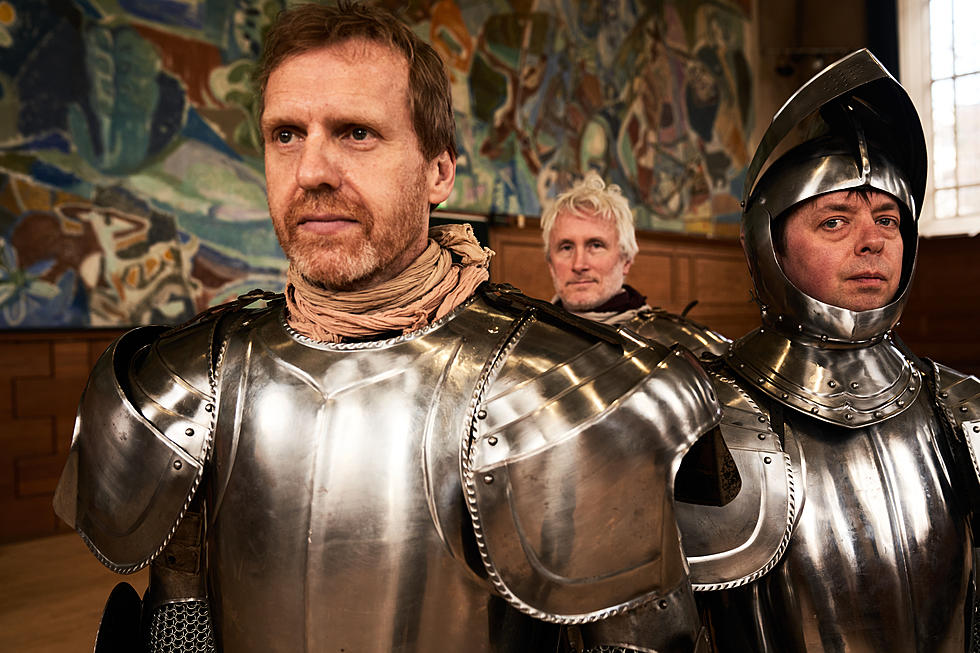
Would-Be-Goods in Paris, Sept. 2025. Photo: Ian Greensmith

Happy release day to WOULD-BE-GOODS! 
When Peter Momtchiloff interviewed Jessica Griffin for chickfactor 13 in Y2K, we wonder if he knew he would become partners with Jessica in music and life? Either way, we are happy the Would-Be-Goods restarted as a live and recording pop group in the early 2000s and have played at many of our events, releasing a number of fantastic (albeit) underheard albums on the Santa Barbara label Matinee Recordings. During the pandemic, Jessica wrote a song a day clocking in at 173 songs in total, and just today the wonderful Tears Before Bedtime has been released on vinyl and CD via Skep Wax Records. The current lineup of Would-Be-Goods is Jessica Griffin, Peter Momtchiloff (Heavenly, Railcard), Debbie Greensmith (the Headcoatees), and Andy Warren (Monochrome Set, Adam and the Ants).
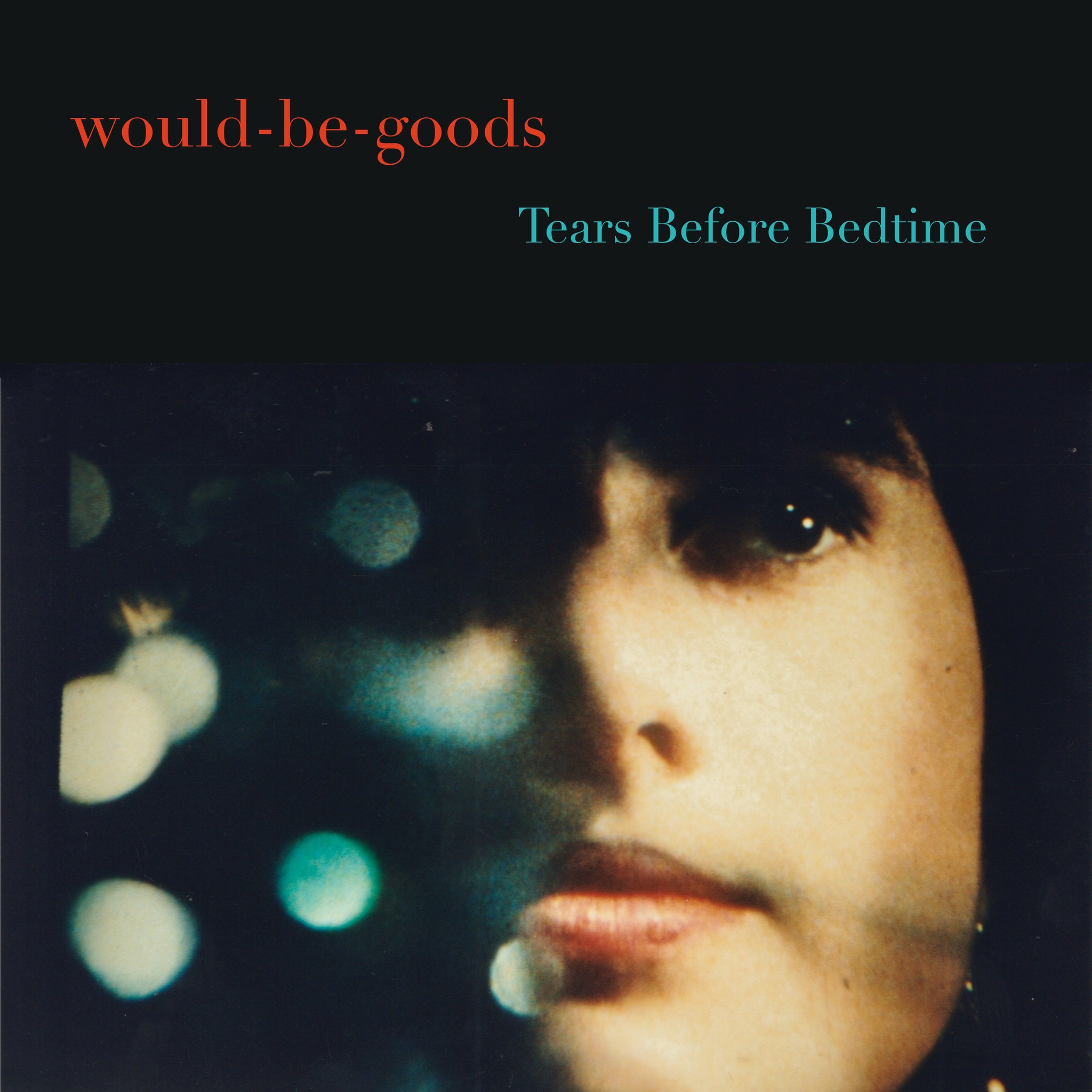
Out today! On Skep Wax Records – available via Jigsaw in the US

chickfactor: Is it just me or did the entire UK media just discover the Would-Be-Goods? BBC radio! How does it feel to finally get some press in your home country? It’s about time!!
Jessica Griffin: It’s exciting but also a bit strange. It takes me back to the él Records days, when the Would-be-goods got quite a lot of media attention in the UK (although I think we sold more records in other parts of the world).

The upcoming tour dates seem like the biggest tour you’ve done in ages or ever. Are you excited to hit the road?
Very. I’m a travelling player at heart, and I love being on the road with the band. We’ll be doing shows in parts of the country we’ve never played in before, as well as going back to some of our favourite places. (I’m thinking of Glasgow…)

You became incredibly prolific during the pandemic, writing 170 songs or something. Did that carry on? How regularly do you sit down to write? Do you have a schedule or ritual? Where does it happen?
I’d have carried on happily but after 173 songs I thought it was time to take a break and release some of them as EPs on Bandcamp. That meant doing quite a bit of work on the original demos to turn them into something I felt happy about sharing. It’s hard to keep switching between editing mode and writing mode—one requires tight focus, the other needs the opposite.

I haven’t done much songwriting since then as we wanted to finish the studio album. Then I had to sort out the artwork, make videos, do interviews and so on. But I’m sure I’ll start writing songs again soon—the melodies that come into my mind (especially when I’ve just woken up) are becoming rather insistent! I’ll probably use the same strategy as I used for my song-a-day project, i.e. sleeping on a title and giving myself a tight deadline to finish the song. I usually write them in my head as I’m pottering round the house or walking around the neighbourhood, stopping to record my ideas as voice memos. I get quite a lot of the lyrics this way but at some point I have to write them out so I can look at them and see what needs changing. Then I make a rough demo on Garageband with a programmed drum track and a guitar track.
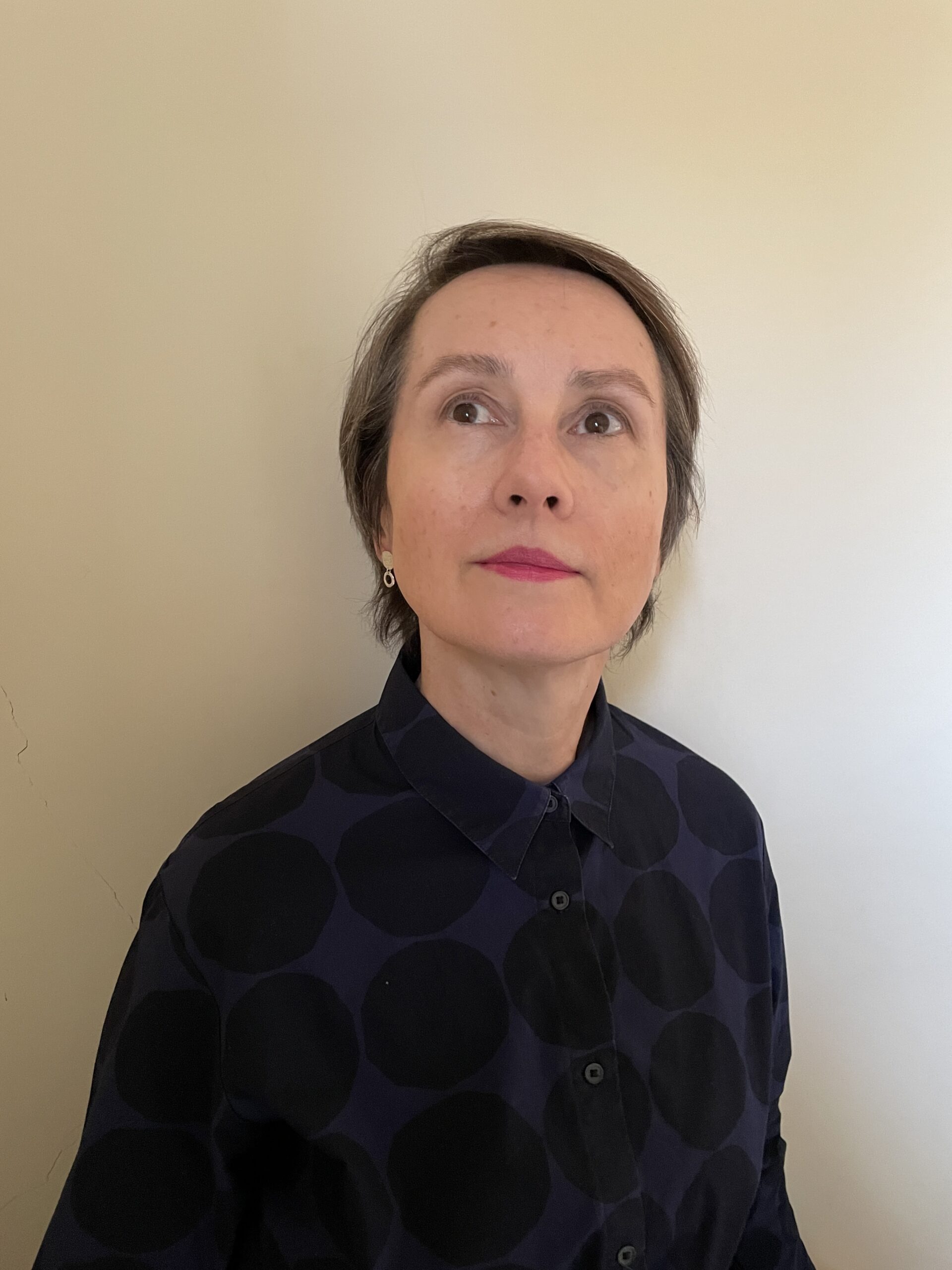
Jessica, London, 2025.

 How was recording this album different from previous ones?
It took much longer, not only because of the pandemic but also because other members of the band were busy and Debbie now lives some distance away. It wasn’t easy to find times when we could all get together to practise and record the songs.

We approached recording in a different way this time. Usually we’d put down guide guitar (to a click track) and guide vocals, then we’d record the instruments and vocals in layers, starting with bass guitar and drums, but for this album the whole band went into the live room and Jon recorded us playing the song together. We’d do a couple of takes to make sure we had good bass guitar and drum tracks. Other guitars, vocals and overdubs would usually have to be redone or added afterwards. This way of recording captures more of the energy of the band, I think.

Another difference is that I recorded most of my vocals at home, something I learned to do during my lockdown project. I’m more relaxed when I’m singing on my own and the result is more intimate, which people seem to like.
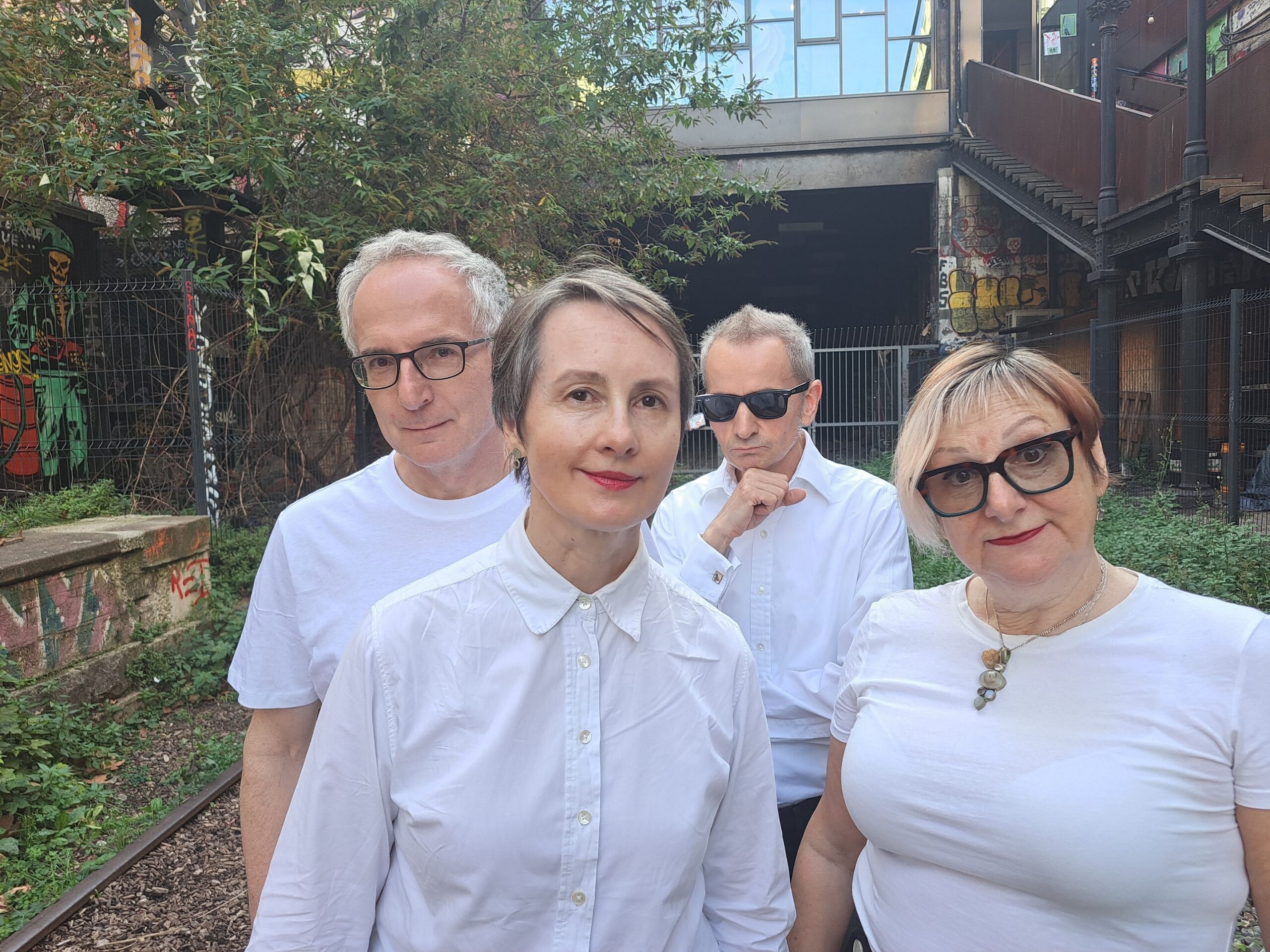
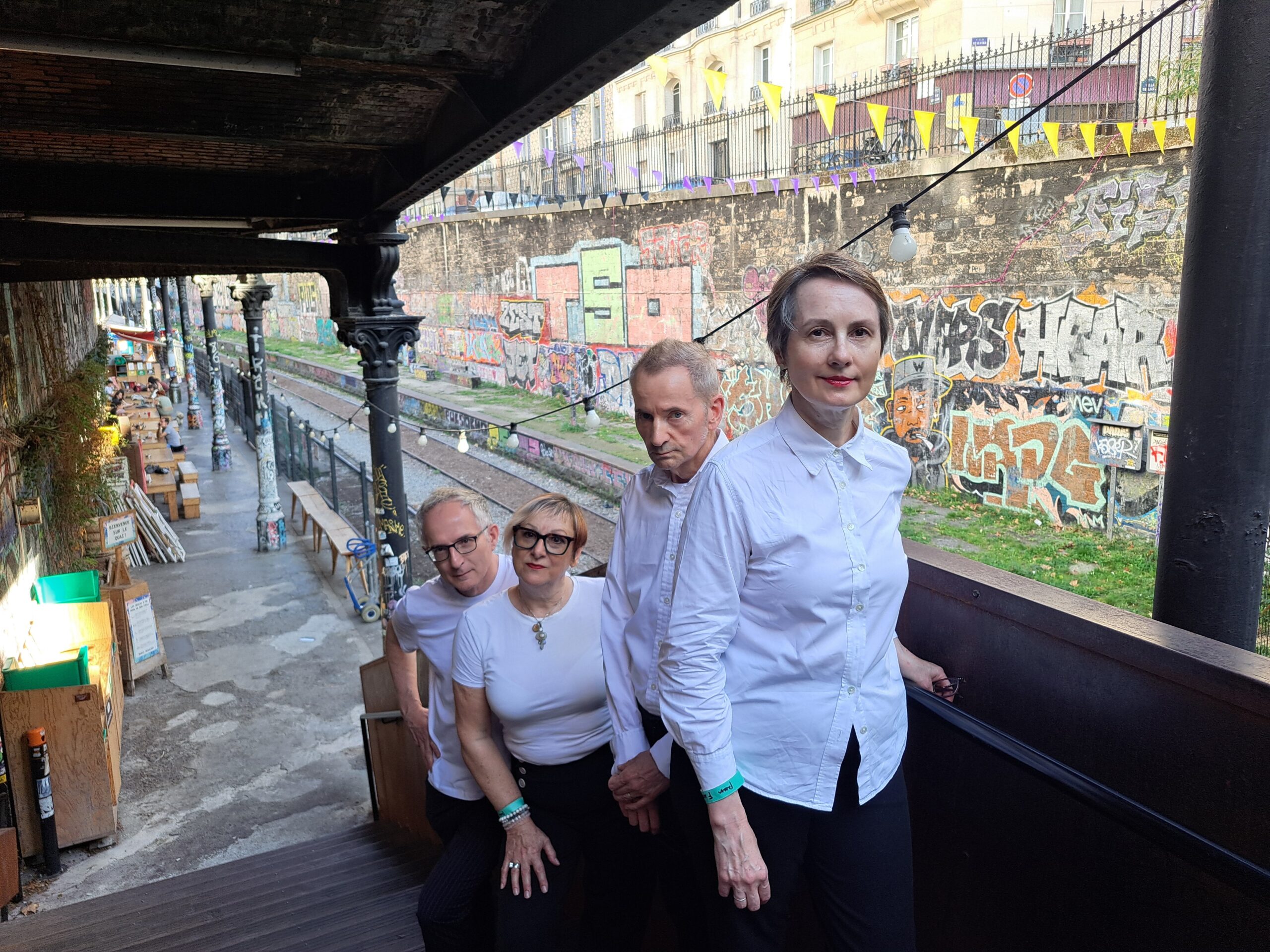
Would-Be-Goods in Paris, Sept. 2025. Photo: Ian Greensmith

How has band activity changed since Mr. Momtchiloff retired?
Peter’s new-found freedom meant we could finish the album more quickly, as he was now free to go into the studio with me on weekdays. He’s been very busy with his other bands too, recording albums with Heavenly and Railcard. 

What kind of potions or elixirs do you use to soothe your singing voice?
I don’t have any secret formulas! Hoarseness hasn’t been a problem for me since I took some classical singing lessons and learned how to support my voice properly, using my abdominal muscles. (I was surprised to learn that I’m actually a soprano, although I don’t tend to use the upper part of my range for the Would-be-goods.) The only potion I drink is tea, which isn’t the best thing for the voice as it’s quite acidic. I make sure I drink plenty of water the day before I have to sing, I never drink alcohol before a show and I’ve never smoked. 

Let’s talk ageism. You are at the top of your game like many women of a certain age so why does society treat us all as if we are invisible?
I don’t know. The older women musicians I know are far from invisible—they get plenty of appreciation and respect. I’ve always had good examples of strong older women in my life and make a point of seeking out good role models now.

What’s on your reading table? What art shows have topped your list lately?
I’m reading ‘The Art Cure’ by a London-based academic who has spent her life studying the effects of making and experiencing art (including music, dance, all forms of visual art, and more) on our minds and bodies. It makes you realise how short-sighted it is of governments to make cuts in the arts as if they’re a luxury, when they really are fundamental to our happiness and wellbeing. 

Our last art show was ‘Radical Harmony’, an exhibition of neo-impressionist paintings at the National Gallery). What really stood out for me were Seurat’s drawings and the luminous portraits of Dutch-Indonesian artist Jan Toorop (who later went full Symbolist and became a massive influence on Gustav Klimt). 
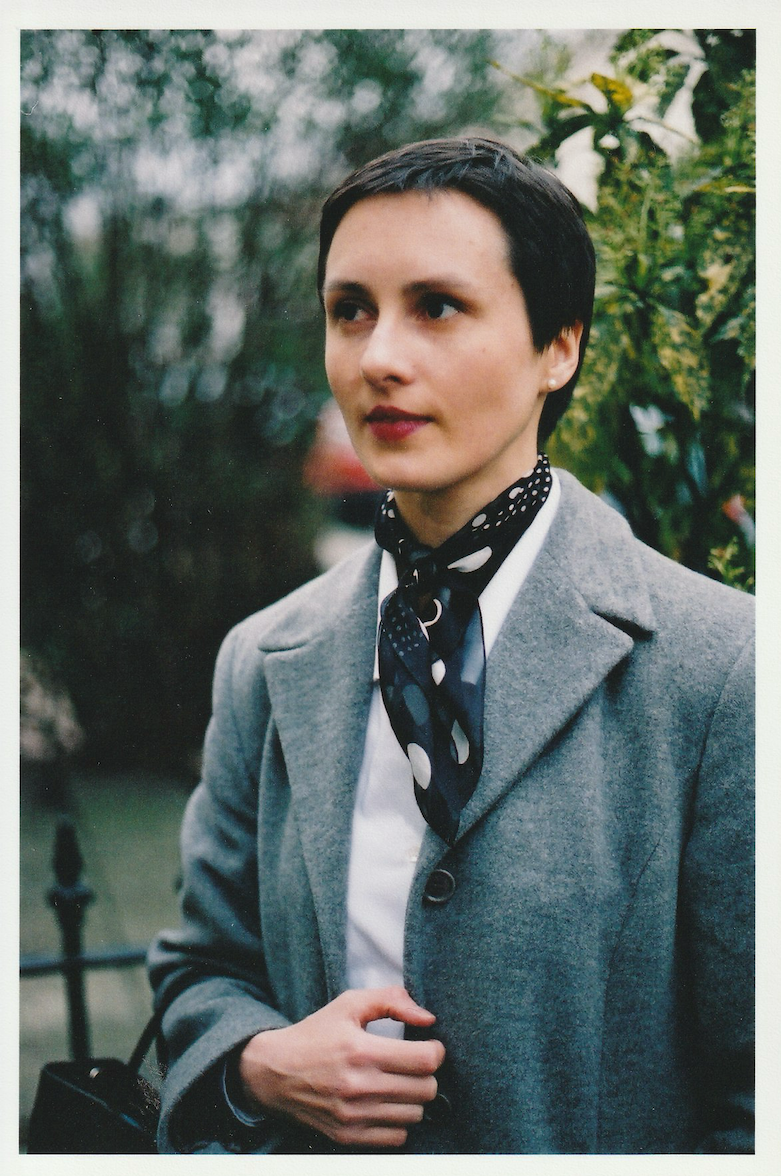
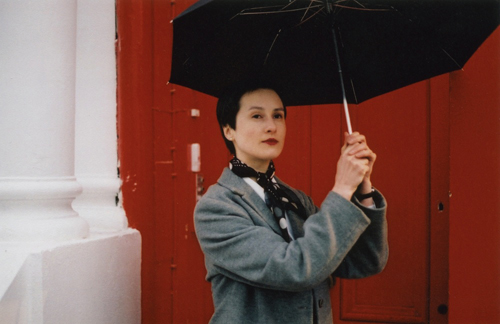
Jessica in London, Brief Lives shoot, 2001. Photo: Gail O’Hara

Can you cook? What’s your specialty? Peter’s?
I’ve cooked since I was a small child – I think it’s an essential life skill. In those days it was mainly baking (bread, scones, cakes, etc) but now I make pretty much everything. Peter is a very good, instinctive cook but his New Year resolution was to cook from recipes. I gave him Fuchsia Dunlop’s book on Sichuanese cooking for Christmas and he is working his way through that (to my great delight). 

Any new cats on the horizon?
Jessica: I’m very tempted but my last cat had health problems which stopped me from travelling for years. I want to enjoy a bit of freedom before succumbing again.
Peter: I’ve told her she can get another cat when she’s 70.

If we came to your neighborhood for one day, what should we do?
I’d recommend a stroll along Golborne Road and the north end of Portobello Road. There are still some interesting independent shops, cafés and restaurants. Further north, next to Regent’s Canal, there’s a lovely little place called Meanwhile Gardens, created many years ago on waste land by volunteers. A walk eastwards along the canal towpath up to Little Venice is a nice thing to do on a sunny day. Portobello Road on a Saturday is much too crowded for me but if you go during the week, I’d recommend popping into Books for Cooks on Blenheim Crescent, a specialist cookery book shop which has a test kitchen at the back, serving very good-value lunches from Tuesday to Friday. (Get there well before 12 and be prepared to queue outside!) There’s a lovely little Swedish bakery, Fabrique, on Portobello Road, and a good Malaysian restaurant called Makan under the Westway flyover. 
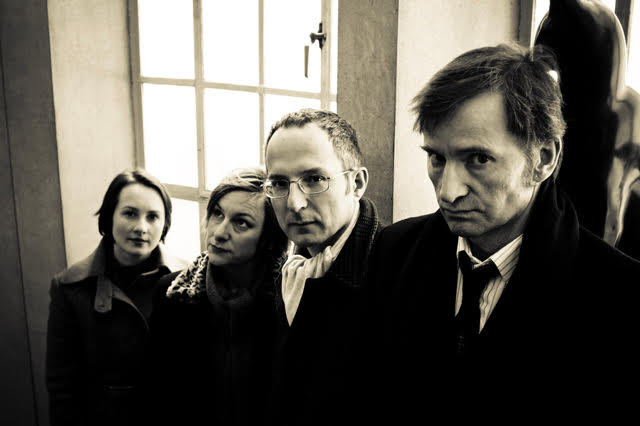
Would-Be-Goods. Photo: Mike Jones

Who is the comedian in the Would-Be-Goods?
Peter, Debbie and Andy are all very funny. Andy loves word play (especially puns and anagrams) and all three are good at witty ripostes. I don’t have that quick wit in conversation – I can only think of the perfect come-back long after the moment has passed.

Talk us through your stagewear protocols.
It’s usually a last-minute decision: ‘stripy or black?’ We branched out at last year’s Paris Popfest and wore black trousers with white shirts. I thought we looked rather chic but one French reviewer said Debbie and I (who both wear glasses these days) looked like kindly librarians from a fictional English country village. Actually, that’s not a bad look. 

What’s it like being on Skep Wax?
It’s great. I don’t think there can be a label that is more enthusiastic about its artists and bands and which works harder to get their music out there. I think being veteran indie musicians themselves gives them a huge advantage. 
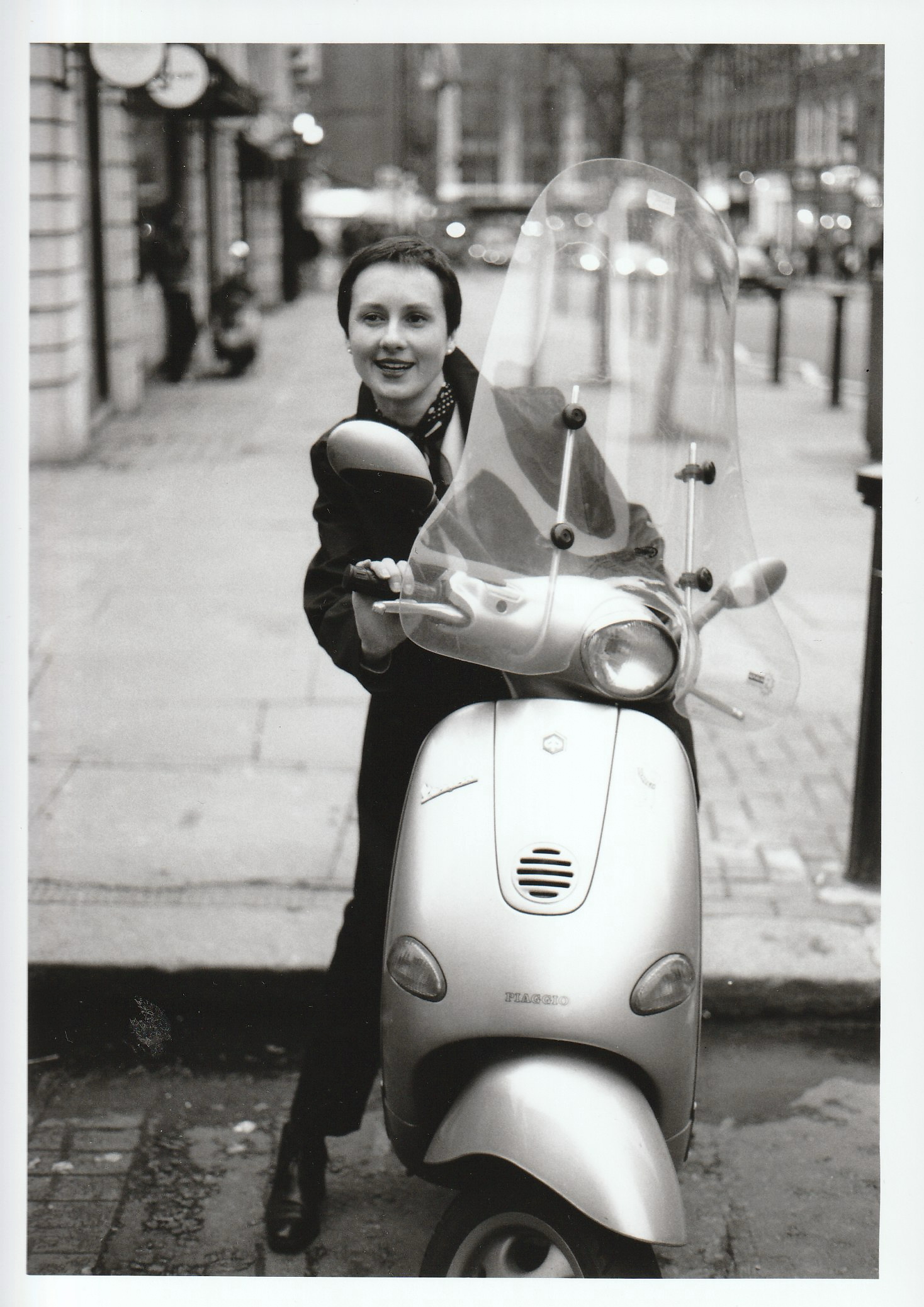
Jessica in London, Brief Lives shoot, 2001. Photo: Gail O’Hara

What is your favorite London pub and why?
Jessica: It would have to be the Betsey Trotwood in Clerkenwell, epicentre of the London indie scene. The owner and staff create a friendly, relaxed atmosphere, the beer is good (I’m told), and the ground-floor bar is the perfect setting for informal afternoon gigs as well as the occasional party. 

Peter: I also like the Lexington of course, the musical hub of London. A fine old-fashioned pub for social drinking, if there are not too many of you, is the King Charles I in King’s Cross. And in young people’s London, I think of two pubs which are great music venues but also great for a social: the Cav in Stockwell and the Victoria in Dalston.

Do you pay attention to popular music? If so, any songs you enjoy? Or other bands/albums by anyone currently?
Jessica: These days I don’t get to hear much new music unless it’s by bands and artists we know in real life. It’s not that I’m not interested – I keep meaning to listen to the radio more but I go to bed very early these days.

Peter: Strangely, my two favourite albums of last year were by men from Kent: the High Span and the Penrose Web.  I also liked Baxter Dury’s record and, getting a bit closer to Chickfactor territory, Former Champ from Glasgow, whose melodic punch and conciseness reminded me of a less lairy Guided by Voices.
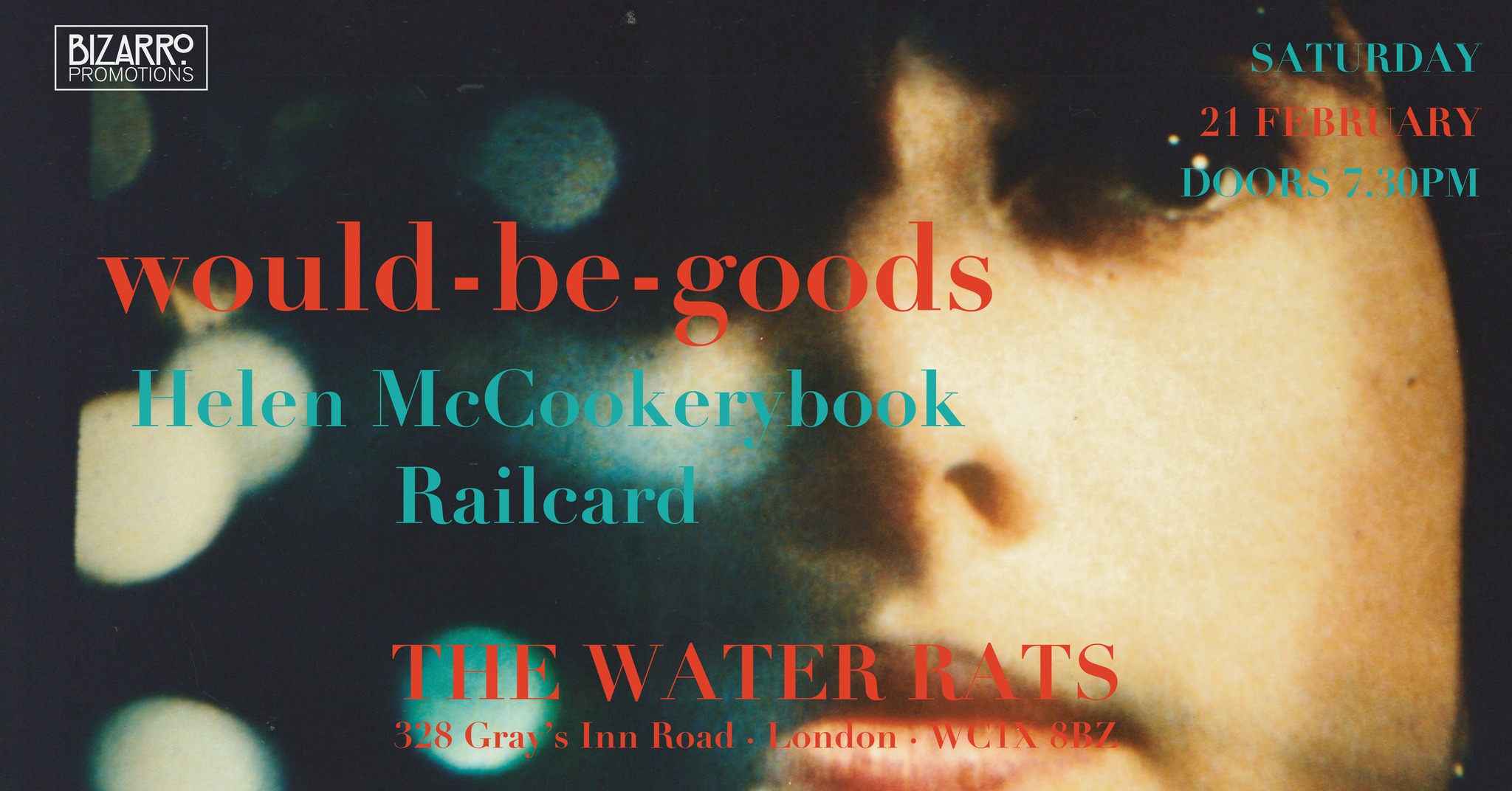
Would-Be-Goods tour dates:
Feb. 21: The Water Rats, London
Feb. 25: The Just Dropped In, Coventry
March 5: Ramsgate Music Hall, Ramsgate
April 3: The Gate Arts & Community Centre, Cardiff
May 29: The Central Bar, Gateshead
May 30: Glad Café, Glasgow

Early Would-Be-Goods

10 tips for budding songwriters by Jessica

1. Feed your mind. Read – not just contemporary fiction. Listen to music from different times and places. Watch old films. Go to art galleries. Everything you experience will combine and ferment and something strange and new will come of it.

2. Keep a notebook of words and phrases that appeal to you – the title of an old film, a chapter heading in a book, a fragment of a poem, a scrap of conversation you’ve overheard. Take the notebook to bed, pick something out before you turn off the light, and sleep on it. Your brain will get to work on it overnight. 

3. Try different ways of sparking musical ideas. Strumming chords on a guitar or piano doesn’t work for everyone. Try taking an intro from an old song and imagining a different course it could have taken, or borrow a bar of a melody and see what you can make from it. 

4. Make yourself write a song every day for a month. It can be a very simple song, even a silly song – it doesn’t matter. The important thing is just to produce something. It’s the best antidote to perfectionism, which leads to writer’s block.

5. Don’t have rigid ideas about the sort of songs you should (or shouldn’t) be writing. Accept whatever comes up and work with it. 

6. When you’re in songwriting mode, go for long walks by yourself. A large park is ideal but city streets are just as good. (Take care when crossing, though!)  I find the rhythm of walking helps my thoughts flow.

7. Record all your ideas, no matter how small: snippets of melody on a voice memo, a line or two of lyrics in a notebook. You think you’ll remember them later but you won’t. This applies especially to ideas that come to you first thing in the morning when you’re half asleep, which are sometimes the best.

8. Sing your lyrics aloud from time to time as you write them – what sounds good to your inner ear might sound clumsy when you’re actually singing it.  

9. Be careful about who you play your songs to, especially when you’re just starting to write. It can be discouraging if the response is lukewarm, or if they love what you’ve written, you may find yourself writing to please them rather than yourself. 

10. Never compare your songs to other people’s. It can discourage you, or lead you astray. Just keep doing what you do and feeding your mind, and your songwriting will get better. 
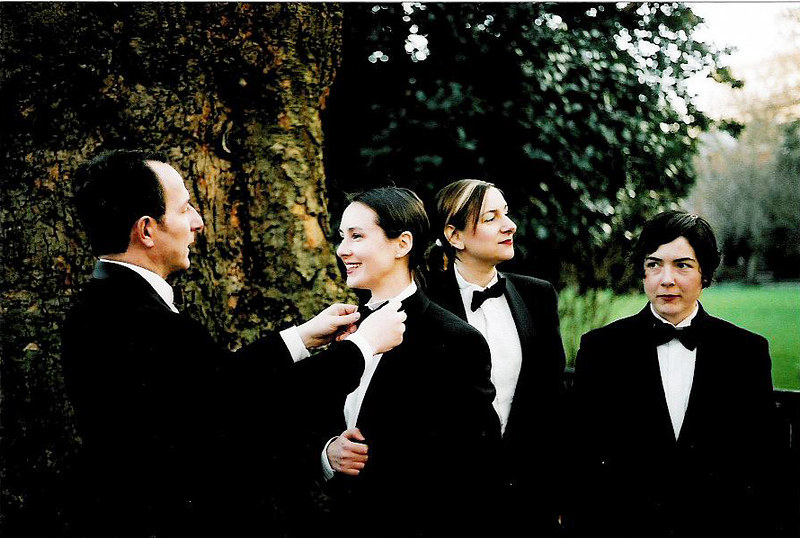
Would-Be-Goods circa 2004 (Peter, Jessica, Debbie and Lupe Núñez-Fernández) in London, Brief Lives shoot, 2001. Photo: Gail O’Hara

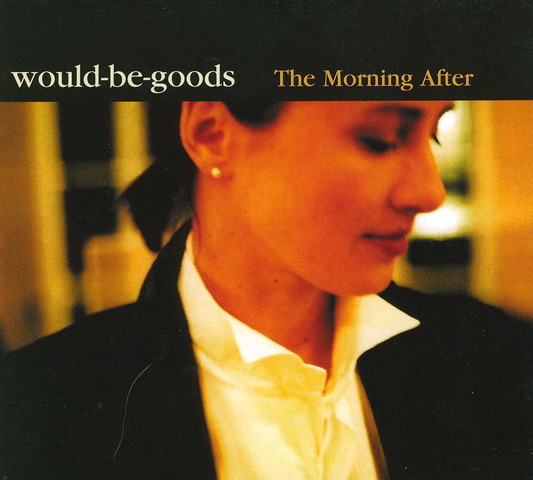
Tears Before Bedtime – out today! 

01 The Gallopers
02 Dr Love
03 Tears For Leda
04 The Back Of Your Bike
05 The Tears Of Cora Pearl
06 The Rose Tattoo
07 Don’t Come Crying To Me
08 Witch Hazel
09 Old Flame
10 Carmilla
11 The Bride Wore Black
12 Madame X
13 Away With The Fairies
14 The Moon Doesn’t Mind
The Clientele Is Back. YAY.

Photo courtesy of James Hornsey

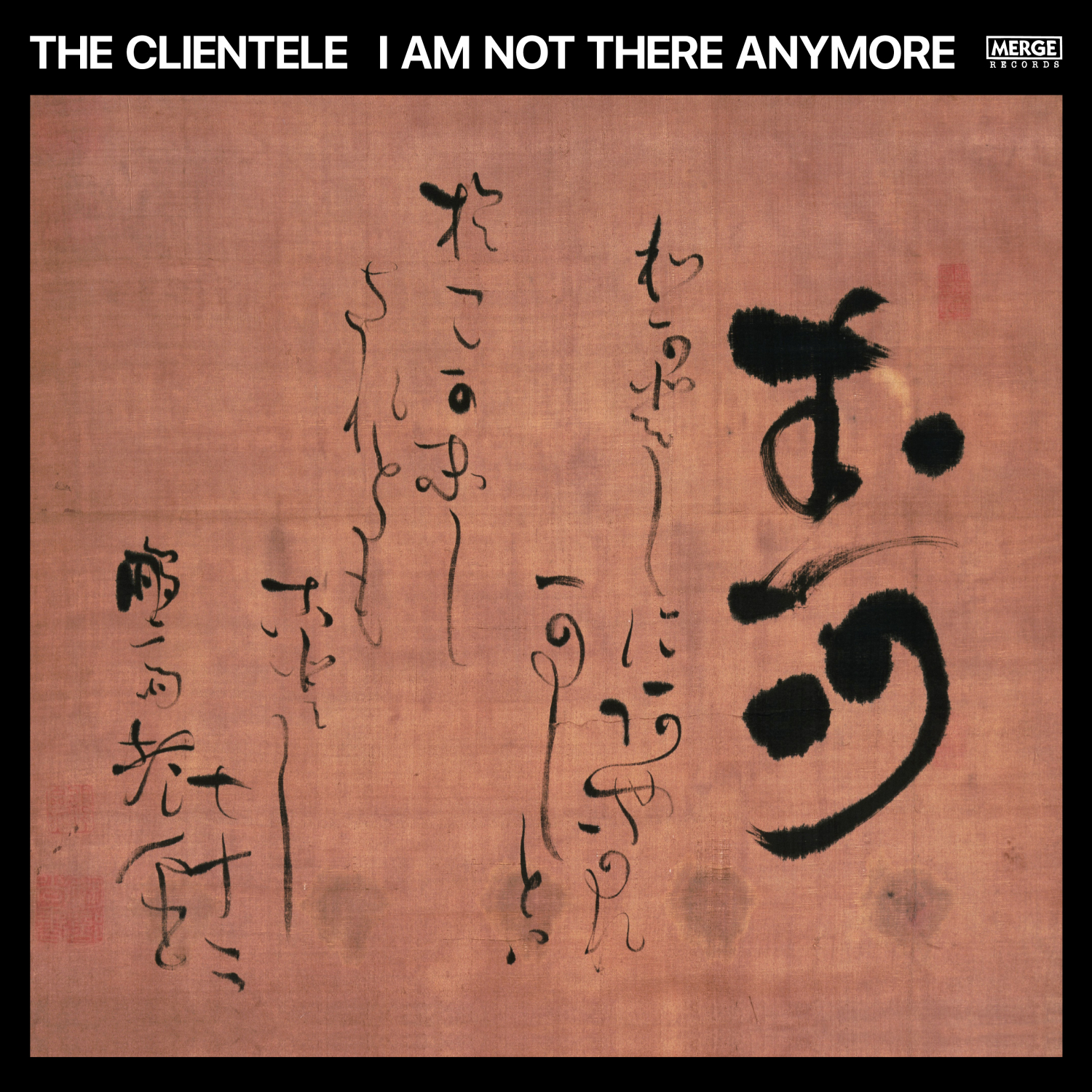
When I first listened to I Am Not There Anymore, the brand-new The Clientele LP coming out July 28, 2023, on Merge worldwide, I was a bit shocked. As you probably know by now, it feels different. The strings, the spooky goth vibe, the odd beats. It may not have the flow of a cohesive album, but the pop lovers among us will have more than enough to fall in love with, despite the dark undertones. In case that makes no sense, I’ll just say it: I love this album but it took a few go-rounds to get used to it all. I mean, it’s not that radical. It sounds like a band taking their time and flexing their creative muscles in the recording process. It sounds like one of the greatest living bands because it is. We caught up with Alasdair about what was going through their minds making the record. Scroll down for their U.S. tour dates; and hopefully more countries too since the UK seems to have finally noticed that these pop gods walk among them.

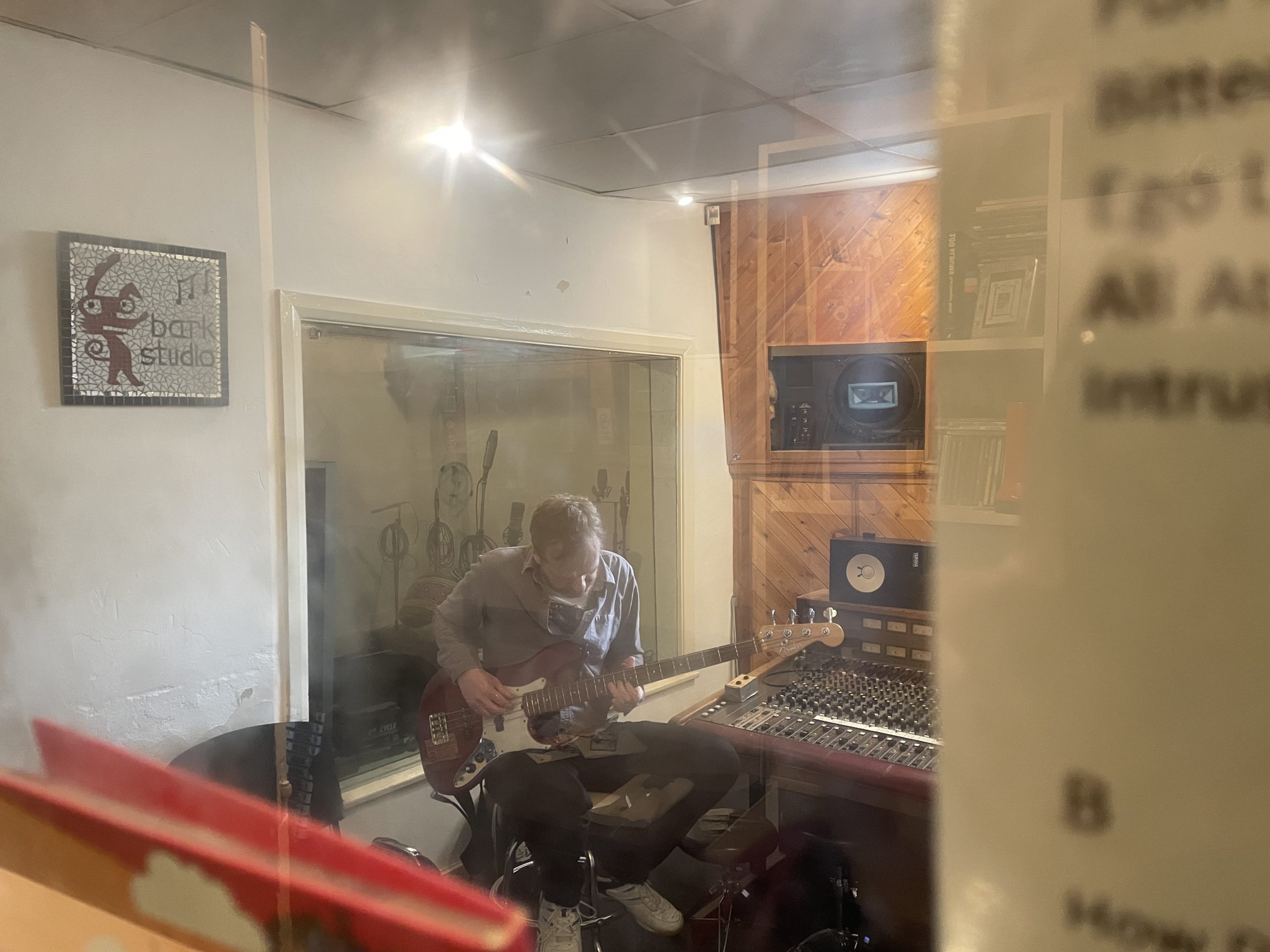
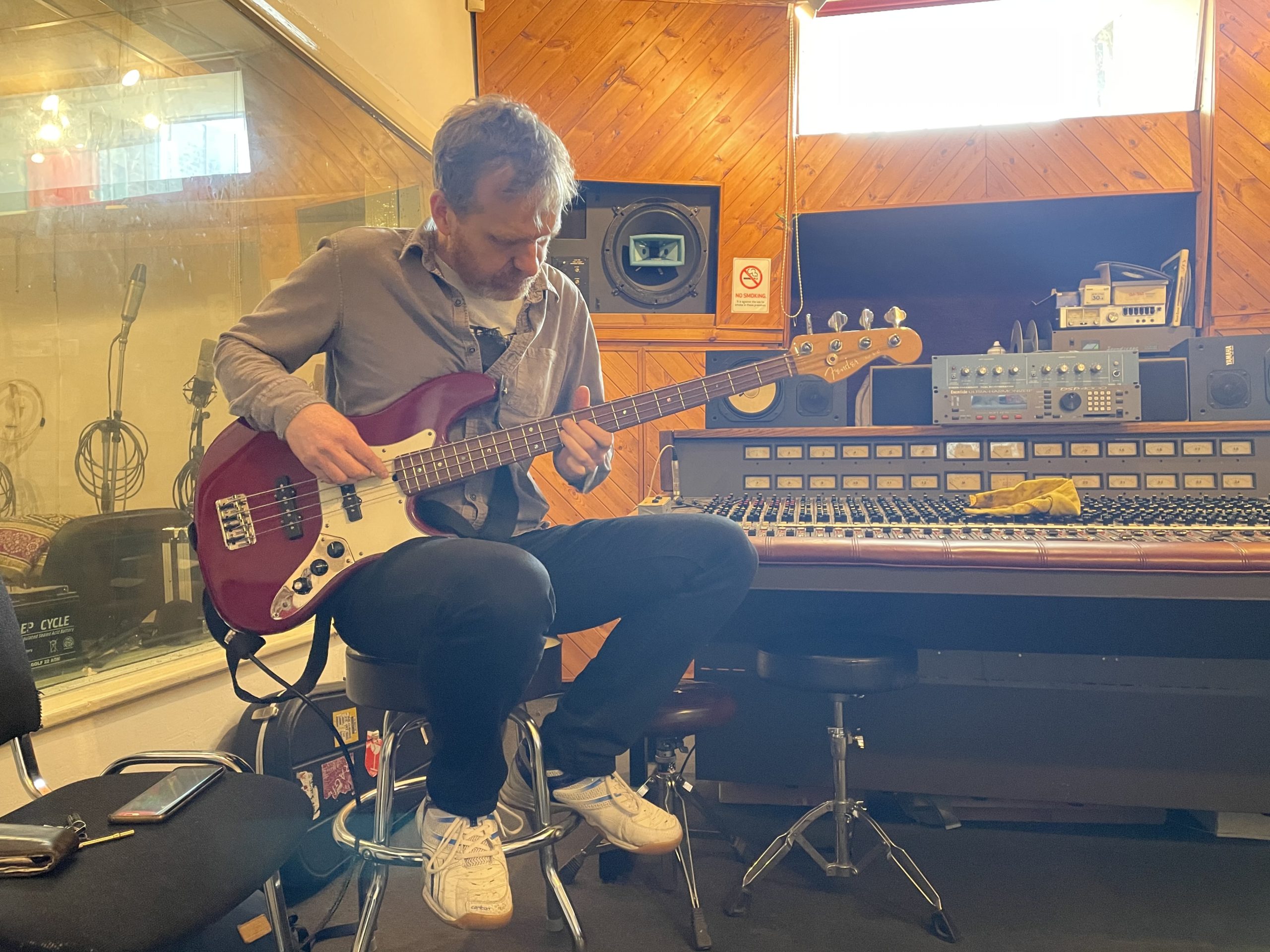
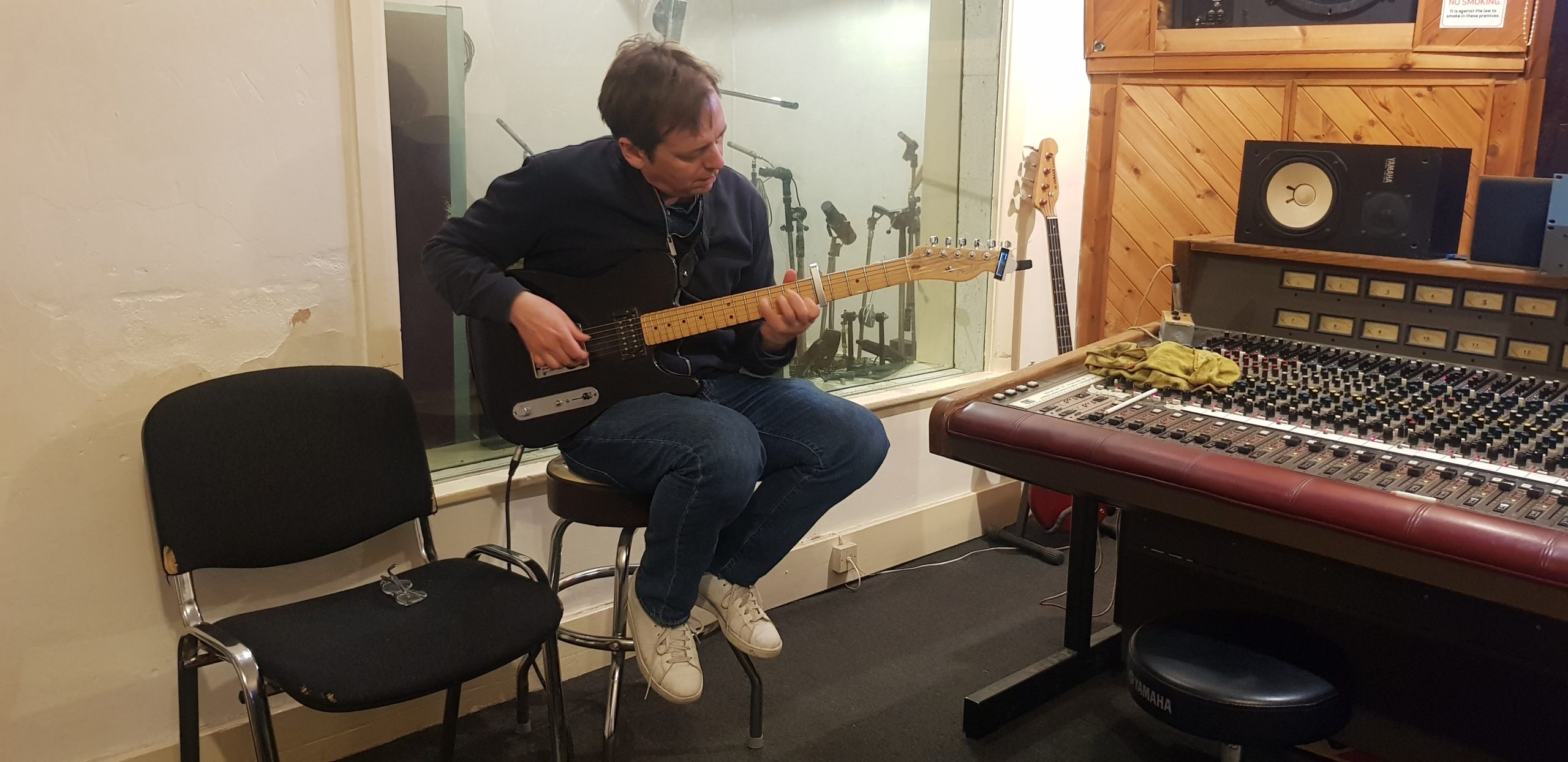
The album was recorded at Bark, Snap and Klank Studios, London from 2019–2022 with assistance from Brian O’Shaughnessy, Marco Pasquariello and Simon Nelson. All time greats Alasdair MacLean on vocals, guitars, tapes, beats, bouzouki, Mellotron, organ; James Hornsey on bass, piano; and Mark Keen on drums, percussion, piano, celesta. Additional parts played by Daniel Evans – extra drums on ‘Blue Over Blue’; Sarah Field – trumpet; Dave Oxley – horn; Ruth Elder – violin; Non Peters – violin; Stella Page – viola; Sebastian Millett – cello. The strings and horns were arranged by Alasdair MacLean and Mark Keen; ‘Through the Roses’ arranged by James Hornsey and Alicia Macanás, who also cowrote and sings on the lead track, ‘Fables of the Silverlink.’ That’s Jessica Griffin from the Would-Be-Goods doing the English spoken bits as well. Interview by Gail O’Hara / Thanks to James Clientele for the studio shots (even tho he didn’t take any of Mark Keen)

Front cover image: Long Life, 1823 by Kameda Bōsai, Minneapolis Institute of Art

Chickfactor: How long has this one been in the making? 
Alasdair MacLean: Three centuries.

If this one has a theme, what is it? 
Beautiful complexities (I hope). Above all, the feeling of not being real, of being outside yourself. I like to think of it as a kind of emotional autobiography set to music, but where all the details have been blurred and edited out, there’s just fragments and moods. 

The first time I listened, it felt *different* from previous stuff. What kind of record did you want to make here? 
We always tried different stuff in the studio before, but it was always a catastrophe. We tried to make a dub version of ‘House on Fire’ in a studio in rural Kent once, it was one of the most embarrassing episodes of my life. We did some jungle/drum and bass recordings with a live drummer when we were recording ‘Suburban Light’ but I had no idea what to add to them – it ended up with backwards tenor recorder and tritone chords on the guitar – horrible.

This time round we had a computer, so we could record in a studio and take tracks away to edit and add to, then bring back again, and slowly I worked out ideas which could bring in things I loved – flamenco rhythms, modal scales etc. which didn’t feel awful. It wasn’t like there was a band and a producer sitting there, looking at their watches and saying “er, where are you going with this?”

I joked that this was a goth record; but it is spooky and vintage sounding at times. What mood were you trying to conjure with Mark’s Radials and Alicia and Jessica? 
Mark has been writing spooky piano tunes for us since 2001 I think. So that’s nothing new – we got him a celesta to play on this time, which is an innately spooky instrument. Alicia sang notes I couldn’t reach in the Phrygian mode, and Jessica has such a lovely speaking voice. I was so glad when she agreed to help – it was like her voice was another of the instruments we could put together in harmony.

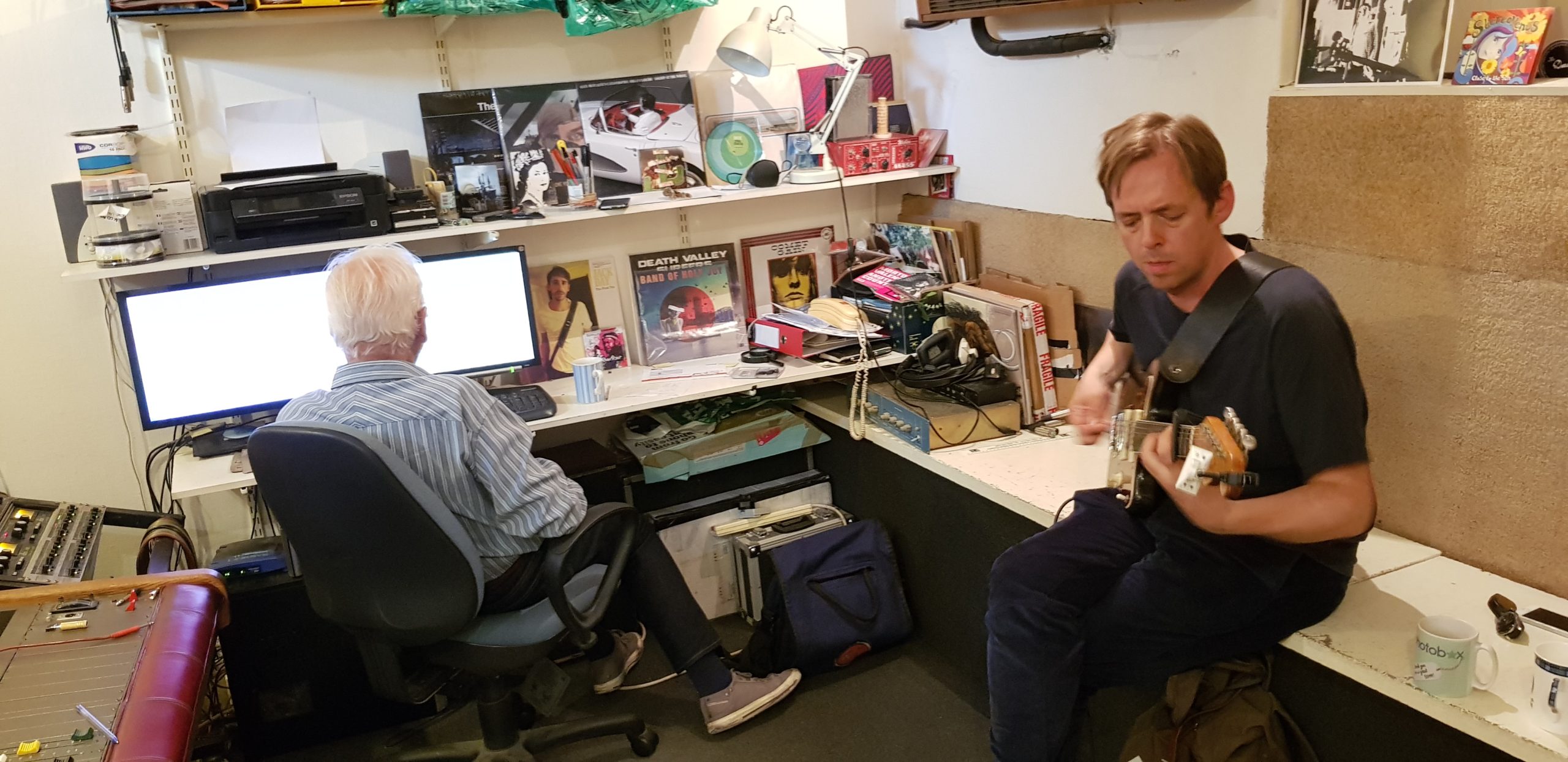
Photo via James Hornsey

How is what you listen to informing what you do? 
I like some electronic music and jazz and Spanish guitar music. I love this small group of artists from California, they are mostly released on the Cold Blue Music label. At the moment I’ve been playing Phillip Schroeder – ‘Passage through a Dream’ loads – it sounds a bit like Mark’s Radial pieces. 

Where does the songwriting process begin? 
Somewhere I have no access to.

How do you capture lyrics? A pen? A smart phone app? 
It always used to be a pen and a piece of paper. I’ve now changed to notes on iphone. Tragically, I also use a Trello board to swap things around and see if they look different in a different order. Quite often ideas come from quotes or images from books I read, so I take photos of the page too. 

Is your lyric book still available? 
I think there are a few left, somewhere at the back of my storage lockup.

Photo courtesy of James Hornsey

How did the pandemic change The Clientele? How did it change London? 
It didn’t really change the band; in some ways it made London better, less crowded. But it probably finished the arc which started in the late ’90s, where small businesses were made uneconomical, and everything became a chain store. Now the chain stores are going bust too.

You seem bigger in the UK than you were; true/false? 
True, among gentlemen of a certain age.

Brexit WTF? 
I’m tired of thinking about it, but I expect in some future time we’ll look back and realise just how truly sinister the consortium of people who took over the country were. 

If any good comes of it, it will be a general awareness of the obscenity of class privilege. Boris Johnson is a useful idiot in this regard – a very public symbol of unjust rewards.

How is fatherhood impacting the music-making process? 
It changes month by month. I’m happy to sit back and learn.

If London has a sound/smell/taste, what is it? 
Fermented fruit on the top deck of buses.

Photo courtesy James Hornsey

What is nature giving you that you desperately need? 
At the moment, mud.

Who are the 5 most underappreciated musicians in London? 
Musicians can’t afford to live in London anymore.

Got any recurring dreams you want us to explicate? 
Not of my own – I enjoyed reading one of T.H. White’s recently though – in the dream he was very anxious to hide his shotgun in the trunk of his mother’s car to avoid it being struck by lightning. It made me laugh a lot.

Best pub in town? 
I like the Flask in Highgate, or the Swimmer at the Grafton Arms in Holloway. The Great Northern Railway Tavern in Hornsey is a perennial favourite.

If you have to make food for friends, what is your star dish? 
Tortilla soup

What’s wrong with 2023? 
Music streaming, newspaper owners 

Who is the comedian in the band? 
Mark and James are both naturally funny, I have to try harder. I’m sort of the annoying one who tries to get a quip in every sentence, which is why I tend to dominate the interviews.

Do you have any band rules? Dress code?
Absolutely no ukuleles under any circumstances. 

Not the usual drummer / courtesy of James Hornsey

What are you reading? 
I love Anne Serre and Marie N’Diaye

‘26 views of the Starburst World’ by Ross Gibson is a wonderful, reflective book, it was recommended to me by Anwen Crawford who also wrote a beautiful book last year called ‘No Document’

There’s a forgotten English writer from the early 20th century called Mary Webb who I’m tracking down slowly. 

Perhaps because I’m getting old, I’m revisiting a lot of classic British children’s literature: The Dark is Rising, The Box of Delights, Ursula LeGuin and Diana Wynne Jones   

What are you watching? 
I haven’t been watching much of anything. I need film recommendations.

What is your advice to fans when it comes to supporting you? 
Buy records, use bandcamp, book tickets.

On behalf of all CLIENTELE fans, why can’t you just put out one album per year?
We used to put them out once every 2 years, and that nearly killed us. We were told we had to, or people would forget us. But when we stopped, we got more popular! I guess there are enough records in the world already without releasing more just for the sake of it.

What’s on the turntable these days? 
Pharaoh Sanders- Floating Points
Arthur Verocai
Idris Ackamoor and the Pyramids
Jimmy Campbell – Half Baked
I’ve also been listening to a lot of Tom Verlaine since he died. A lot of what he did beyond the guitar playing – the approaches he took – really fascinates me.

btw, of course we interviewed the Clientele in our paper zine chickfactor 13, Y2K, still available in our shop. Get the new album here.

Not the usual drummer either / courtesy of James Hornsey
Tiny baby Clientele
The band circa 2017
Artwork by Tae Won Yu; created for a CF22 poster (2014)

catching up with daily song generator jessica griffin from the would-be-goods

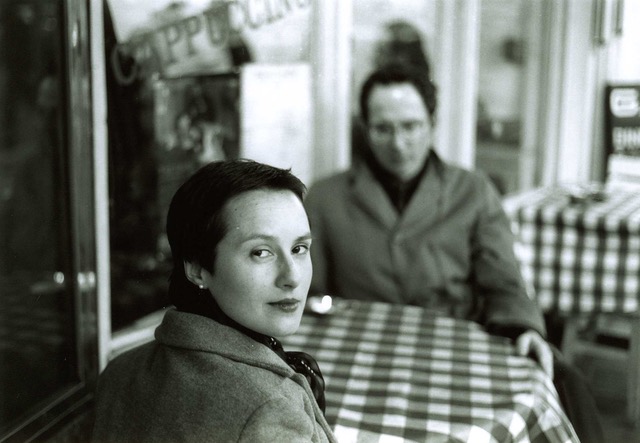
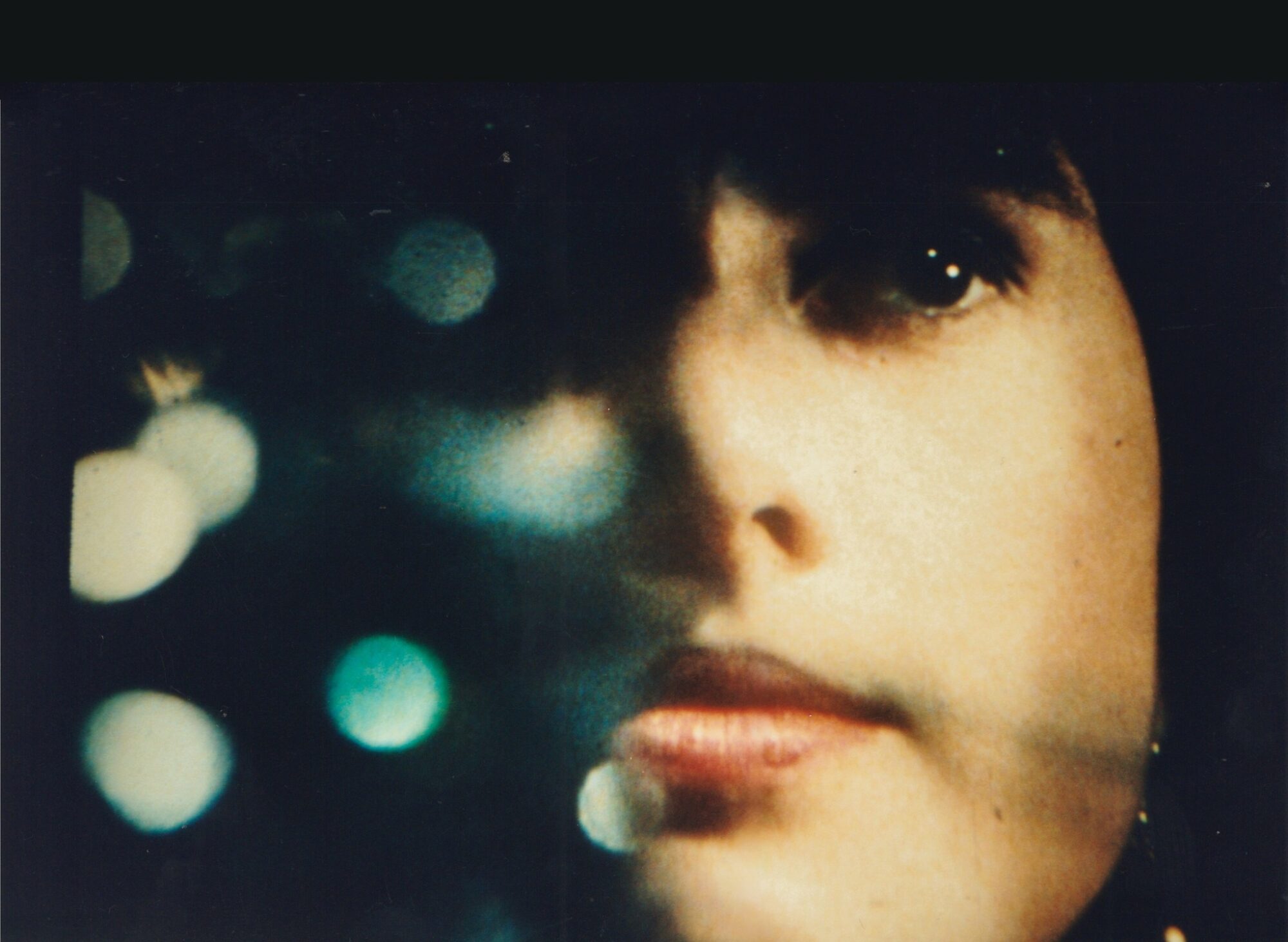
Jessica Griffin from the Would-Be-Goods in London, 2001. Taken by Gail O’Hara

chickfactor 13 (2000) published an interview with Jessica Griffin from the Would-Be-Goods 21 years ago conducted by Peter Momtchiloff, who ended up joining her band, which also features Deborah Greensmith and Andy Warren. I took a lot of photographs of them while I lived in London (2001 and 2004) that have ended up on their album covers, and the WBGs have played at many chickfactor parties. While some of us haven’t been able to focus or achieve our creative potential during COVIDtime, Jessica has become rather prolific. We checked in with her about how it’s going. Interview by Gail O’Hara

chickfactor: how are you holding up? 
jessica griffin: Fairly well, although my dreams are much more vivid than usual which must mean I’m more stressed out than I think. 

How different is your life under lockdown than it was before?
In some ways, very different. Peter (my partner and fellow Would-be-good) has been staying with me since it all began, and I’ve got into a different routine, cooking twice a day (except at weekends) and writing and recording songs daily.

What has been getting you through this time? Books, food, etc. 
Peter’s company, Zoom chats with friends and songwriting. I’m too restless to read much these days, although when I’m feeling anxious I devour 20th-century detective fiction. We’ve been watching the short Cocktails with a Curator talks from the Frick Collection and old black-and-white British films, e.g. Spring In Park Lane, Cast A Dark Shadow. I’ve always cooked regularly but food seems much more important now. We have a proper lunch every day which is quite old-fashioned (and French!) and I’ve expanded my repertoire quite a bit.
I find cooking very calming.

Jessica performing at the Luminaire; photo courtesy of Jessica

What do you miss most about beforetimes? 
Friends and family. I haven’t seen my (grown-up) daughter for over a year as she lives in another city. She’s very Victorian and doesn’t do FaceTime/Zoom. And I really miss my almost-daily lunches at a wonderful local cookery bookshop/café run by an eccentric Frenchman. 

How has London changed since this happened? For better or worse.
I haven’t been further than a mile from home since March 2020 so I can only talk about my own part of west London. In the first lockdown, with almost no traffic and very few people around, you could smell the grass and flowers in the gardens and parks. 

Seeing so many local shops, restaurants and cafés go out of business is heartbreaking, though. 

Can Brexit be reversed? 
Probably not in our generation. I think it’s a huge mistake.

Let’s talk about your new songs! When did you start writing one song per day? And how many are you up to now?
2 October 2020. I thought it would be good to have a creative project as I was slowly turning into my grandmother. I’ve written 157 songs so far. 

How has Peter been involved in the process if at all? 
My idea was to treat songwriting like a game or challenge, so I asked Peter to give me a title every evening. I would write and record the song the following day and play him the result. It’s worked for me in the way nothing else has. Sitting around waiting for the muse never got me anywhere. I should say that Peter doesn’t have any preconception of what the song should be about, or how it should sound. He just gives me a title and that’s it. Sometimes I will change the title retrospectively if I think it suits the song better.

Otherwise it’s a solo project — I do all the singing, play all the instruments (apart from bass on a few songs) and recording.  

What have you learned about yourself as a songwriter, a musician and a home-recorder since you started doing this? 
I’ve learned not to be so precious about songwriting and to treat it like a job that I have to get on with every day, whether I feel like it or not. It’s helped me to override my perfectionist tendencies as I have to finish the song by the end of the day and play it to Peter even if I’m not happy with it. And I’ve learned that I can’t trust my own judgement, at least my first impressions. Sometimes I’ll think a song I’ve just written is rubbish but when I listen to it again a few days later I like it. And vice versa. My singing, guitar and keyboard playing were quite rusty at the beginning but they’re improving. And being in charge of the recording process means I can do as many retakes as I want, which has helped me to sort out some things I didn’t like about my singing. 

Jessica and Peter in London, 2001. Photo by Gail O’Hara

Can you give us some details about some of the songs? Titles/subject/etc. 
“Ouija Board Romance” is set in a provincial English town in the 1920s and is about a housemaid being invited to join a séance hosted by her employer, and the unexpected result. “The Magic Hour” is about a suicide pact between a spoiled young man and an older courtesan in a hotel in Khartoum in the siege of 1884. “The Wind Will Change” is about a drifter in 1940s America, written from the perspective of a woman or girl who loves him but knows he’s not going to be around for very long. “Demon Lover” is the story of the ‘damsel with the dulcimer’ in Coleridge’s poem “Kubla Khan,” who is outraged that she’s been spirited away from her loom in rural Devon and abandoned in the dark cavern of the poet’s imagination. And finally, “Cavanagh, Cody and Byrne” is about a mysterious vaudeville act that might actually be something much bigger.

I don’t know where these ideas and characters come from. I always wanted to be a writer or film director so maybe these are the novels I would have written or the films I’d have made, compressed into song form. I can picture the characters and their settings in detail and I know who would play the couple in “The Magic Hour” – Omar Sharif and Jeanne Moreau. I’ve also written some songs about universal experiences and situations with quite simple lyrics which aren’t like anything I’ve written before. 

And some songs in recognisable styles but from a female perspective, like “In The Mirror” which sounds like an angsty early Who song but is about being a young woman, having to be what other people want you to be and being able to be yourself only when you’re alone.

Do you have any rituals or unusual holidays that you celebrate? 
My daughter said at age six that she thought it was unfair that we had Mother’s Day and Father’s Day but no Daughter’s Day so we instituted it and I send her a hand-made card and a little present every year.

What are you reading? 
I started reading Victor Hugo’s Les Miserables and Rachel Cusk’s Transit but am finding I can’t concentrate for long.

What is in your fridge? What is your specialty to make?
The usual stuff, plus Thai green curry paste, tahini, fresh ginger, kefir. We’re eating very healthily—everything cooked from scratch, lots of vegetables, etc., but possibly a little too much of everything. Irish soda bread (Darina Allen’s recipe) is my lockdown speciality. I make it with spelt flour which gives it a kind of soft sweetness like English scones.   

If you were running the country (or the world), what would you do first?
I would absolutely hate to be in a position of power and can’t even imagine it. Being the mother of a small child was challenging enough.

What is your sign? 
Cancer.

What is your spirit animal?
A rather small and motheaten bear. 

When we’re allowed total freedom, what will you do first?
Meet up with my sister and take her for the birthday lunch we had to cancel last year because of lockdown.

Any other future plans? Where and when will you release some tunes? 
I’ve just set up a page on Bandcamp where I’ll release some of my new songs very soon. Beyond that, I hope to finish the Would-be-goods album we were working on before lockdown and to start doing live shows again (if there are any venues left).

Thank you, Jessica

chickfactor international travelogue: notting hill/bayswater, london!

honey-kennedy-gail-ohara-london-8-jessica-from-the-would-be-goods

notting hill/bayswater, london (part two)

by jessica griffin, the leader of fantastic london pop group the would-be-goods, mum to an oxford student, foodie and psychology enthusiast, among many other things. she has lived in the neighborhood for 23 years! chickfactor can attest to the super-greatness of al waha as mentioned below…

best venues: the tabernacle, powis square.

best record stores: rough trade, 130 talbot road.

best thriftstore: fara, 10 elgin crescent.

cheap eats: books for cooks (great cookery book shop with test kitchen and café at the back), 4 blenheim crescent. taqueria, 139 westbourne grove. royal china (daytime only, for dim sum). tawana (authentic, friendly thai), 3 westbourne grove.

not so cheap eats: al waha (best lebanese in london), 75 westbourne grove. hereford road, 3 hereford road.

vegetarian-friendly eats: ottolenghi, 63 ledbury road; al waha (see above).

best drinking holes: cock and bottle (splendid traditional pub), 17 artesian road.

best coffee or tea houses: during the summer and early autumn, the temporary pavilion next to the serpentine gallery, kensington gardens. a different architect or artist designs the pavilion each year.

cool cinemas: gate picturehouse, 87 notting hill gate.

best used bookstores: notting hill books, 32 palace gardens terrace.

best local bands, artists, writers, designers: simon fisher turner (film music composer and erstwhile king of luxembourg).

parks and green spaces: kensington gardens, bayswater road (or kensington gore).

unmissable highlights: artisan du chocolat (best chocolates — and hot chocolate — in london, or maybe anywhere), 81 westbourne grove. leighton house museum, 12 holland park road, kensington.

photo of jessica by gail o’hara.