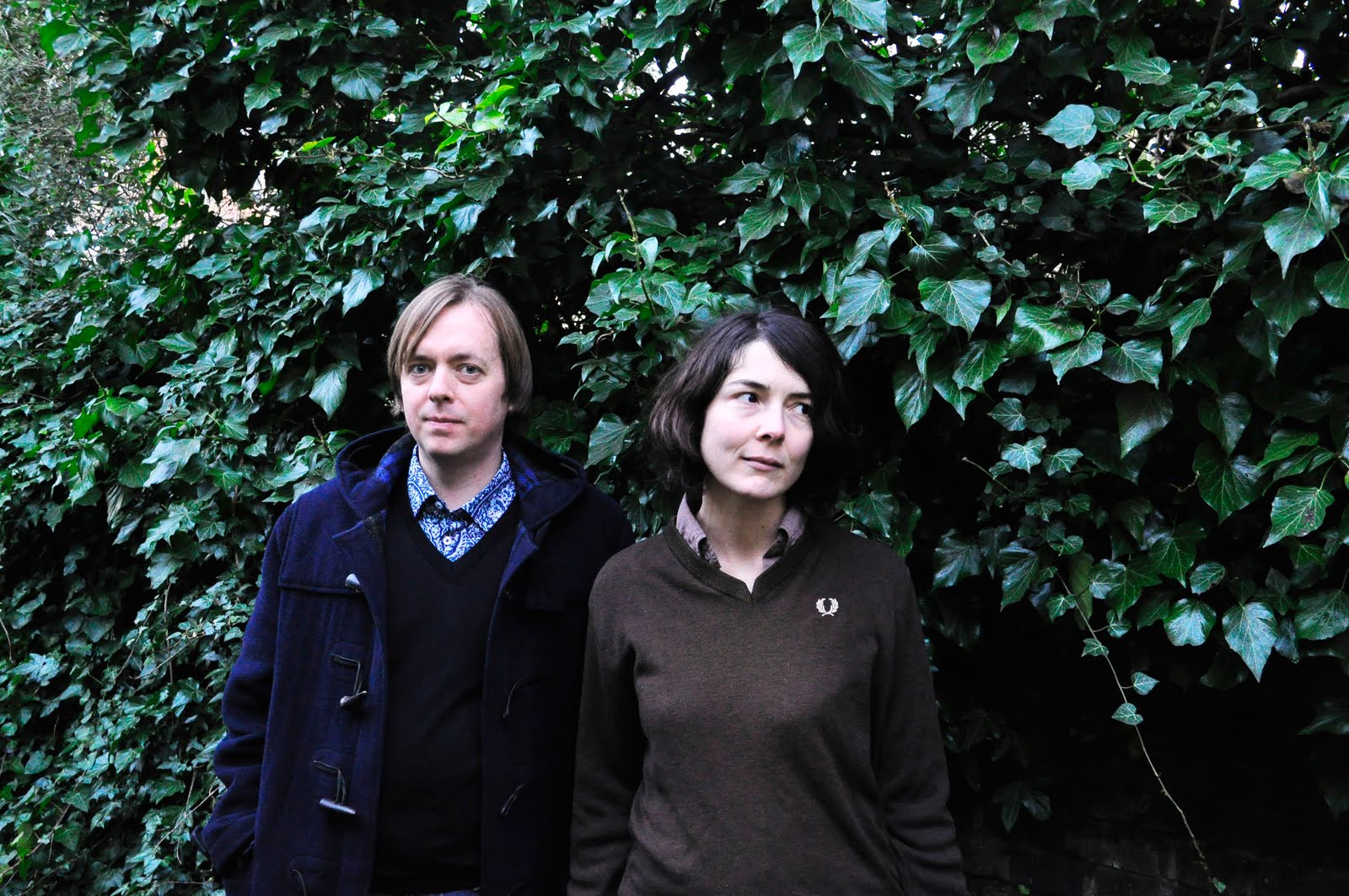
I still remember my first time hearing The Clientele at a chattery, sweaty Papercuts/chickfactor party at the Betsey Trotwood in 1999. Mike Jones used a mini-disc recorder to document the proceedings and we all played it over and over for days afterward.
Now, 27 years later, school teacher and freelance journalist Johnnie Johnstone has written a book about the band (Johnstone also wrote Through the Crack in the Wall: The Secret History of Josef K and has written for Record Collector, Shindig!, and Louder Than War). The aptly titled The Clientele will be published on J-Card Press on Oct. 20. Johnstone was kind enough to answer some questions in honor of the book about one of the greatest living bands.
Order the Clientele book here.

chickfactor: Why the Clientele? A band like the Clientele has had a lot of mystique in their arsenal. Were they on board with the project from the get-go or did it take some convincing?
Johnnie Johnstone: Fortunately, and to my great surprise, the band were on board with the idea from the beginning. I had written about the Clientele’s music on a few occasions previously, and had interviewed Alasdair once before for an article in Record Collector. That maybe helped. Al checked in with James and Mark and I got the green light thankfully.

CF: Tell us a bit about your background. Where do you live? What else do you get up to these days?
I teach Religious Education in a Secondary School near Glasgow, which is where I live with Wendy and my four kids. I work 4 days and in my spare time do some freelancing (usually for Record Collector and Shindig!). I’ve started doing the odd shift in a record store I used to work in, in Glasgow city centre – Missing Records. I worked there in the Nineties, and before that in Tower Records in Glasgow too. I wrote a book about Josef K a few years ago. This is my second book.
CF: When did you first become aware of them? First show/record heard?
My brother introduced me to Suburban Light in late 2000. I had always loved Felt and the Chills and, a first cursory listen of the Clientele put them roughly in the same bracket as those bands. I loved what I was hearing and have followed them ever since. I didn’t see them perform until 2005 – when Strange Geometry came out. There were about 30 people in the audience. That was typical of their shows at the time.

CF: How did things work with podcaster Robin Allender? Did you know you were going to quote the podcast so heavily when you began?
Robin was super helpful. His podcasts with the band were amazingly insightful. He’s an intelligent guy, a great interviewer, and is hugely passionate about the band’s music. He was happy to let me quote from the series and – as you rightly point out – I did so very liberally. I hope he doesn’t regret giving me his permission.
CF: There’s a universal narrative in the book: The band wanted to be famous but things didn’t happen that way. Do you think in the Clientele’s case taking that personally might be misguided when the music industry has changed so much every year since they first started putting out records/playing shows? Every year the economic ecosystem for being in a band pays less. Thoughts?
I’m not sure about that at all. And I didn’t intend to convey the idea that they were in it to succeed at all costs if that’s what you mean? They were just young guys who wanted to be on the front cover of Melody Maker and the NME. But like most young guys, that didn’t happen. I think they were determined to maintain their integrity by continuing to make music that they loved. And that hasn’t changed at all.
But certainly, to touch on one of your other points, their emergence coincided with the first big boom in streaming. A time when both guitar music and vinyl were in what seemed like terminal decline. They’ve managed to navigate these changes really successfully, not by accommodating them necessarily, but by continuing to do things steadfastly in their own way. People respect that.
CF: Why do you think the UK took so long to get on board with their music? People blame the music papers, but hasn’t their power shrunk since the internet took over? John Peel passed away in 2004; did he have their records?
I was going to write a chapter about this, but the fact it didn’t materialise tells you everything you need to know. I don’t really know. I don’t think anyone does. Various people have made suggestions, but I haven’t been totally convinced by any of them. In fact, one of the real mysteries is how their audience sizes in the UK suddenly surged after the band had taken a lengthy hiatus (2010-2017).
There was an article in the Spectator (conservative UK journal) a few years ago which decreed that the Clientele would never have survived without being championed by Pitchfork. I’m not sure that’s true, but Pitchfork is a North American website and might account for the greater exposure and acceptance of the band on the other side of the Atlantic. It has to be said though that – unlike chickfactor – Pitchfork was not immediately onside with the band. Suburban Light got a rough ride to begin with. There’s been some revisionism over time.
As far as I know, Peel played ‘Reflections After Jane’ a few times in 2000, but nothing else, although I could be wrong?
CF: The band was born out of an era where people lived fully “in real life” rather than in a digital realm. The boredom of childhood and the suburbs produced a great deal of inspiration and imagination for the Clientele; now fewer young people experience that slowness of time. How has that changed the way we interact with each other and music? Romanticizing the suburbs is quite a feat, no?
I studied Sociology at University, but nevertheless I feel totally underqualified to adequately answer this question, but as a school teacher I would have to say that over the past twenty years, I’ve noticed a seismic deterioration in social skills, a diminishment of the poetic/romantic impulse, a severance of the capacity to dream and reflect etc. And kids get bored really quickly. All of this is quite naturally a consequence of technology speeding everything up. It’s really sad. Where will the dreamers go?
My childhood was a suburban one – but unlike Alasdair I was never bored. He dreamed and I did stuff. But the music and the words resonate so strongly nonetheless. I’m sure that’s been the case with so many others. As much as it being about romanticising the suburbs, perhaps it’s also about lamenting the loss of childhood, where memories are vivid and foundational.
CF: How would you describe the book to someone unfamiliar with this sort of music?
It’s a short concise biography of the best British pop group of the last thirty years, but if you only have money for the book or one of the band’s albums, buy one of the band’s albums.
CF: If you had to use a literary term to describe Clientele music, what would it be?
A libretto of leitmotifs of lost innocence.
CF: It seems like a band so authentic and real and inclined to control their own art would have a hard time fitting into and submitting to the demands of being huge and commercially successful. Personally I wouldn’t want them to be huge (not that I don’t want them to be wealthy), but perhaps having a small and fantastic audience and playing in good size venues is actually better in the long run, contributing to the longevity?
Absolutely. Their slowburn has taught them so many lessons about life. And more importantly, about themselves. Do you think Mick Jagger or Rod Stewart or Elton John or Madonna know anything about real life? They knew about real life at sixteen maybe. But the Clientele are so grounded – intelligent, well-read, humble, grateful.
CF: The Clientele seem annoyed by being associated with pop music like Belle and Sebastian or Sarah Records, and have actively tried to shed those associations, but in some ways their most recent album is the most inaccessible. Why do you think critics like it so much more than previous works?
I wonder if they are consciously distancing themselves from those comparisons. If not, then I’d say it’s part of what’s going on subconsciously beneath the surface.
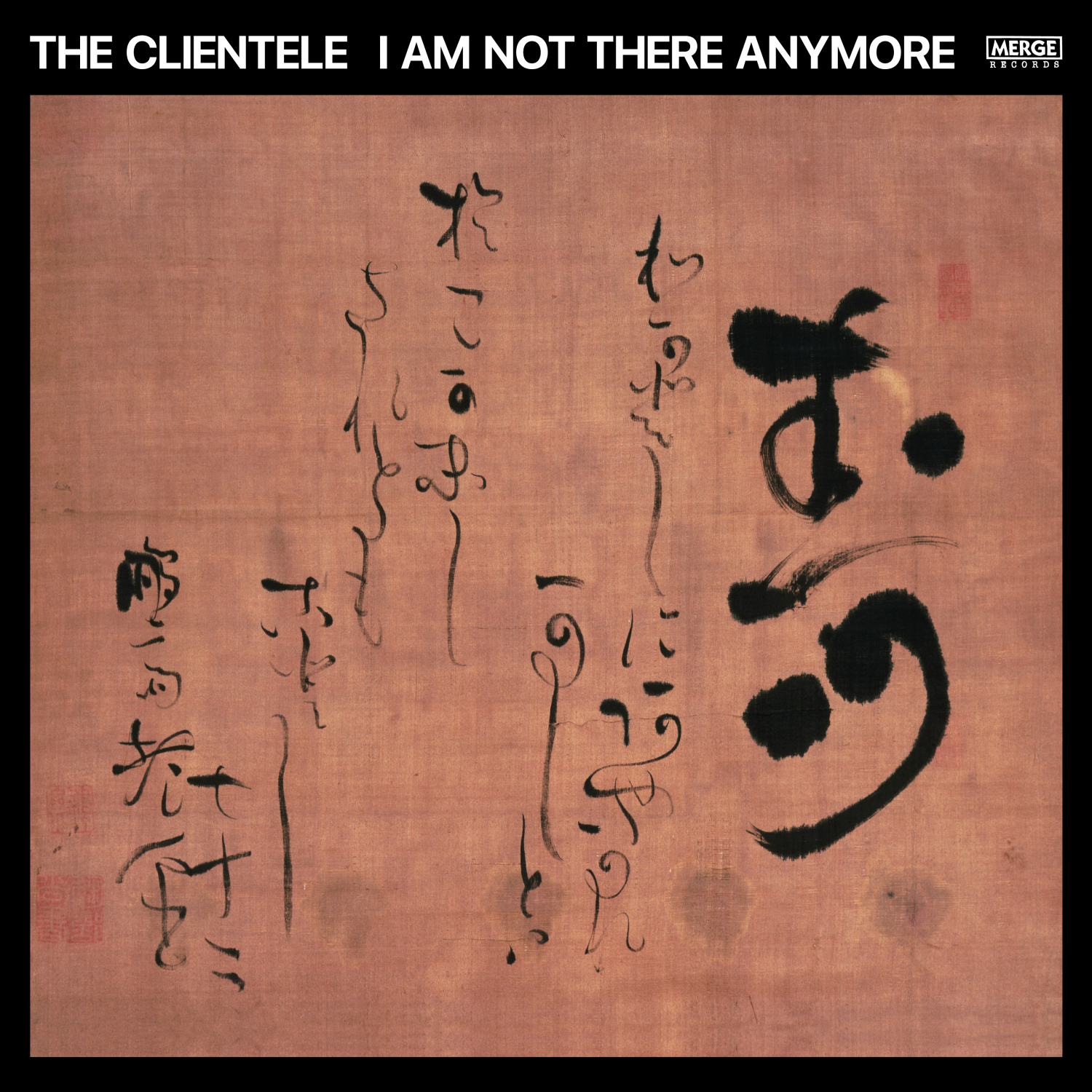
And well, you know what music critics are like – when artists can retain the essence of what makes them unique, while simultaneously continuing to evolve and become more musically adventurous, then we lap that up, don’t we? And I Am Not There Anymore does that so very well I think.
 CF: The terms like “indie rock” have always been meaningless—a band like the Clientele is a pop band like the Beatles or the Zombies or the Velvet Underground. Why is it so important to compartmentalize bands in these weird umbrella terms?
It comes from a youthful desire to be or feel different from everyone else, doesn’t it, and it can affect writers as much as artists. I think the older and more mature you become; the labels begin to kind of fall away. In fact they make us feel downright uncomfortable. It’s like lists of Greatest Albums. I have been one of the worst culprits in trying to pin people down with favourite albums lists, but in the end these things are just meaningless.
CF: What surprised you most about the band members after learning more about them?
Some of Al’s anecdotes were hysterically funny, but in essence the greatest surprise was that as individuals they almost exactly resembled what I had expected them to be. I guess when you really listen to music very closely, there are lots of clues in there about the people who make the music – the music we make (or listen to) is often a mirror image of who we are in ourselves.
CF: What were some things you learned but had to leave out of the book?
I wouldn’t say there was anything significant. There is a lot about their childhood / teenage years (some might say too much) but I left even more out than ended up in the book.
The band were very guarded about their private lives as adults, which I respected. It was never intended to be an expose of misadventures and debauchery! Hopefully one of the consequences of this will be that the music retains its mystery and allure even once readers have thrown the book aside.

CF: Did you interact with the band in person? In their homes, workplaces?
A number of Zoom call interviews and phone calls, with the odd exchange of emails. They were a delight to work with. I made a total nuisance of myself and they played along amiably.
CF: Did you reach out to Merge for the book?
No. But Jeff Gomez, editor-in-chief at the publisher J-Card Press, did, and hopefully they will promote it on their web page.
CF: Don’t you think you should have interviewed me for the book (their No. 1 fan)? 😊
I absolutely regret not doing so. Ditto Howard Monk and Anthony Harmer.
One mistake was deciding from the outset to limit the number of interviewees, given the need to be concise (the book was to be around 45,000 words – which is really short). I shouldn’t have done that. But I should certainly have reached out to you and to Anwen Crawford, both of whom have been instrumental in bringing the band’s music to a wider audience.

CF: What is this US imprint? How did you find them? Where all is it published and how can folks order it in other countries?
Jeff Gomez approached me a few years ago inviting me to consider writing a book about someone at some point. After I’d checked with the band I got back in touch and we took it from there. J-Card Press publishes short concise books about ‘underground’ or unheralded bands. It’s modelled on the 33 1/3 album essay series. It’s a small publisher, but the book should be available directly from the J-Card website or from Amazon for international sales.

CF: Is the Clientele finished with their next album yet?
I’m led to believe they’re still recording it, but they may well be at the mixing stage by now?
CF: What kind of legacy do they have now?
I think they are hugely respected today as a band who stayed true to themselves. Like say, Low or Wire or the Pastels, they do their thing and the world keeps moving.
As for Alasdair, as a songwriter, I think wider recognition will eventually come – he is one of the greatest of his generation – like Alex Chilton or Nick Drake or Jimmy Campbell, his stature will continue to grow over time.
Johnnie’s top Clientele songs
Another list. Aarghhhh! Too hard – but I’d say my favourite Clientele song will always be ‘Monday’s Rain’. I’m not going to say why.
Johnnie’s top album
Depends on the mood / time of year / time of day. If you love the Clientele’s music, you’ll know what I mean.